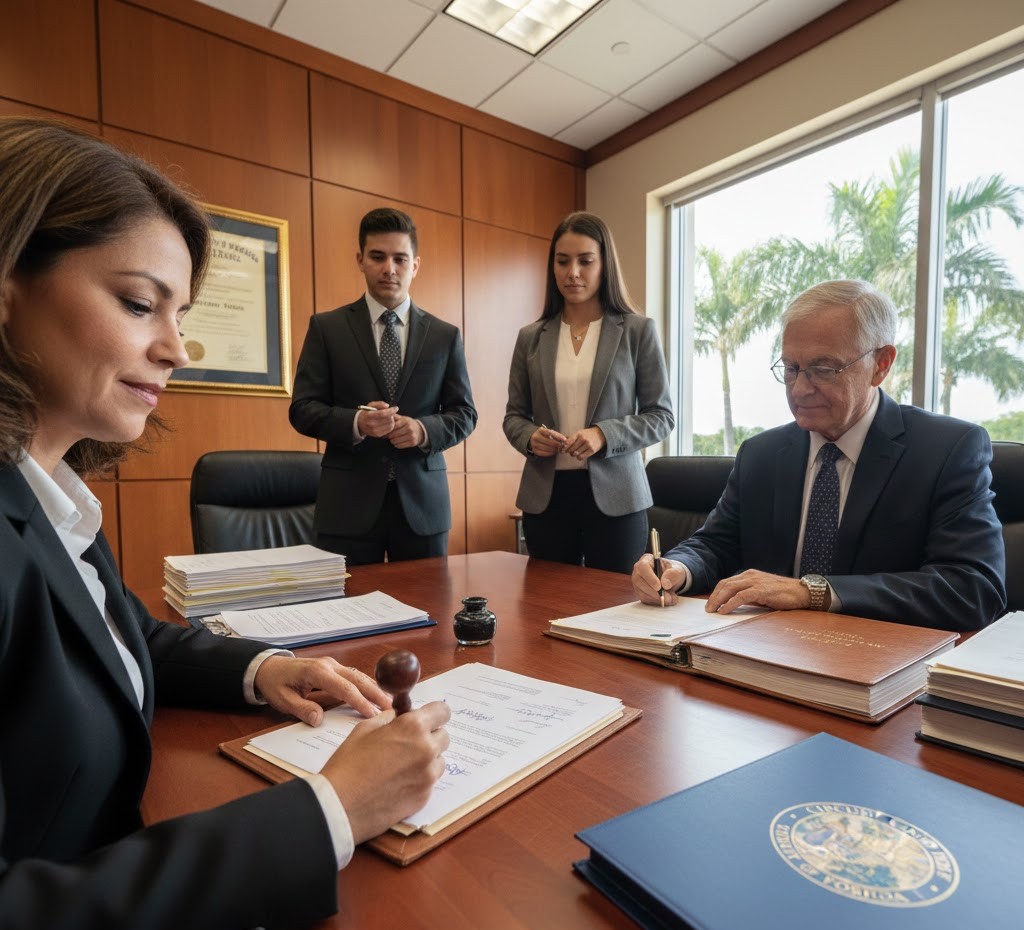
A Power of Attorney (POA) is one of the most important legal documents you can sign in Florida. Whether you’re planning your estate, managing finances, preparing for medical decisions, or helping a loved one, understanding Florida’s POA requirements ensures your document is valid and accepted when you need it most.
This guide breaks down everything you need to know about Florida Power of Attorney requirements, including signing requirements, witnesses, notarization rules, and common mistakes to avoid.
We also recommend checking out our guide to the most common types of documents that need a notary in Florida.
Table of Contents
What Is a Power of Attorney in Florida?
A Power of Attorney is a legal document that allows you (“the principal”) to give someone else (“the agent”) the authority to act on your behalf. Depending on the type of POA, your agent may have the ability to make financial decisions, manage property, access accounts, or handle specific tasks.
In Florida, POAs are governed by Florida Statutes Chapter 709, which outlines strict rules for validity.

Types of Power of Attorney in Florida
1. Durable Power of Attorney
Remains valid even if you become incapacitated. This is the most common type in estate planning.
2. General (Non-Durable) Power of Attorney
Grants broad powers but becomes invalid if you become incapacitated.
3. Limited or Special Power of Attorney
Allows your agent to perform specific tasks, such as selling a car or signing a single document.
4. Vehicle Power of Attorney (HSMV 82053)
Used exclusively for vehicle title and DMV transactions.
Florida Power of Attorney Requirements for a Legal POA
To be legally valid, a Power of Attorney must meet ALL of the following Florida-specific requirements:
1. The Principal Must Be Mentally Competent
The person signing the POA must understand:
- What the document is
- What powers it grants
- Who they are appointing
A notary will ensure the principal is signing voluntarily and not under duress.
2. The POA Must Be Signed by the Principal
The principal must sign the document in ink. If they cannot sign, they may direct someone to sign on their behalf in their presence.
3. The POA Must Be Notarized
Florida law requires all POAs (except some vehicle POAs) to be notarized by a Florida Notary Public.
During notarization, the notary will:
- Verify the principal’s identity
- Confirm willingness to sign
- Complete the acknowledgment certificate
- Apply their notary seal
4. The POA Must Have Two Witnesses
Florida requires two witnesses for any POA.
Witness rules:
- Witnesses must be adults
- They must be present during signing
- They can sign before or after the principal signs, as long as all are present
- The notary can serve as one witness, if not named in the document
Many residents rely on mobile notaries who can provide a witness if needed.
5. Special Requirements for Durable POAs
A durable POA must include specific legal wording:
“This durable power of attorney is not terminated by subsequent incapacity of the principal…”
Without this language, the document is not considered durable.

Common Tasks a Florida POA Can Authorize
Depending on the type, a Power of Attorney may allow your agent to:
- Manage financial accounts
- Pay bills
- Handle insurance and benefits
- Sign real estate documents
- Access safe deposit boxes
- Make business decisions
- Manage property sales or leases
- Submit taxes
- Handle vehicle paperwork
A POA is extremely powerful, which is why Florida Power of Attorney requirements are so strict and have tight notarization rules.
Common Mistakes That Make a POA Invalid
These are the most frequent issues seen by notaries, attorneys, and title companies:
- Missing notarization
- Missing witnesses
- Incorrect witnesses (e.g., named in the document)
- Altered or incomplete forms
- Unsigned pages
- Using outdated POA forms
- Missing “durable” language (for durable POAs)
- Signer not mentally competent at the time of signing
These mistakes can cause severe delays, often discovered at banks, hospitals, or during emergencies. This is why understanding the Florida Power of Attorney requirements is so important.

Do Power of Attorney Forms Need to Be Recorded?
Some types of POAs, particularly those related to real estate transactions, must be recorded with the county clerk before they can be used.
Otherwise, most POAs do not need to be filed with the state.
Can You Notarize a POA for a Family Member?
In Florida, a notary can notarize for family members, except:
- Their spouse
- Their children
- Their parents
- Close family whose names create a conflict of interest
Even when allowed, it’s better for the principal to choose a neutral notary to avoid legal challenges later.
Why Mobile Notaries Are Often Used for POAs
Power of Attorney appointments often involve:
- Seniors
- Homebound clients
- Residents in assisted living
- Hospital or hospice patients
- Urgent situations
Mobile notaries ensure all of the Florida Power of Attorney requirements concerning documents are signed correctly, compassionately, and in the signer’s location.
A mobile notary can also:
- Bring additional witnesses
- Assist with IDs
- Provide privacy and comfort
- Travel on short notice
This makes mobile notary services extremely valuable in Treasure Coast communities.
What to Bring to Your POA Notary Appointment
- Valid ID
- Two witnesses (or request witness service)
- Complete, printed POA form
- All pages present and in order
- Clear instructions from attorney, if applicable
Contact Treasure Coast Notary Service for Notarizing Your POAs
A Power of Attorney is one of the most important and powerful legal documents you can sign, and Florida Power of Attorney requirements are strict to ensure it’s handled correctly. With proper witnessing, notarization, and preparation, your POA will be legally valid and ready when you need it.
For convenient, accurate, and compassionate notarization of Power of Attorney documents across the Treasure Coast, the Treasure Coast Notary Service simplifies the entire process.
Call or text us at 561-545-7278 or message us through our Contact Us page.
If you liked this article, you should read these next:

Leave a Reply